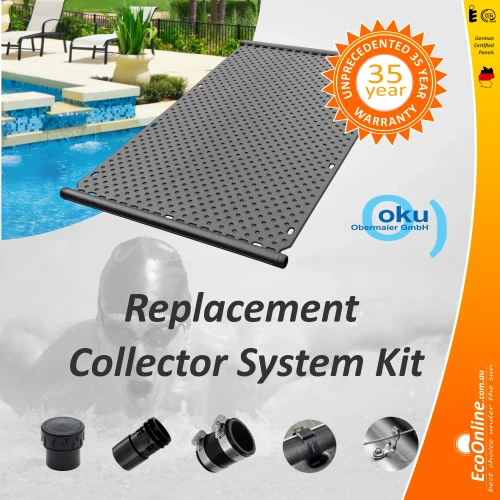
Solar Pool Heater Panels
Your Final Pool Heating System
Performance, Longevity, Aesthetics
with a 50 Year Pedigree.
German engineering at its finest; highest water channel density* and system flow rate for exceptional heat output. Near complete cockatoo, frost and hail resistance for longevity.

Highest Collector Density / Flow Rate / Heat Output
OKU Performance+
* Absorber channel to webbing ratio 93%
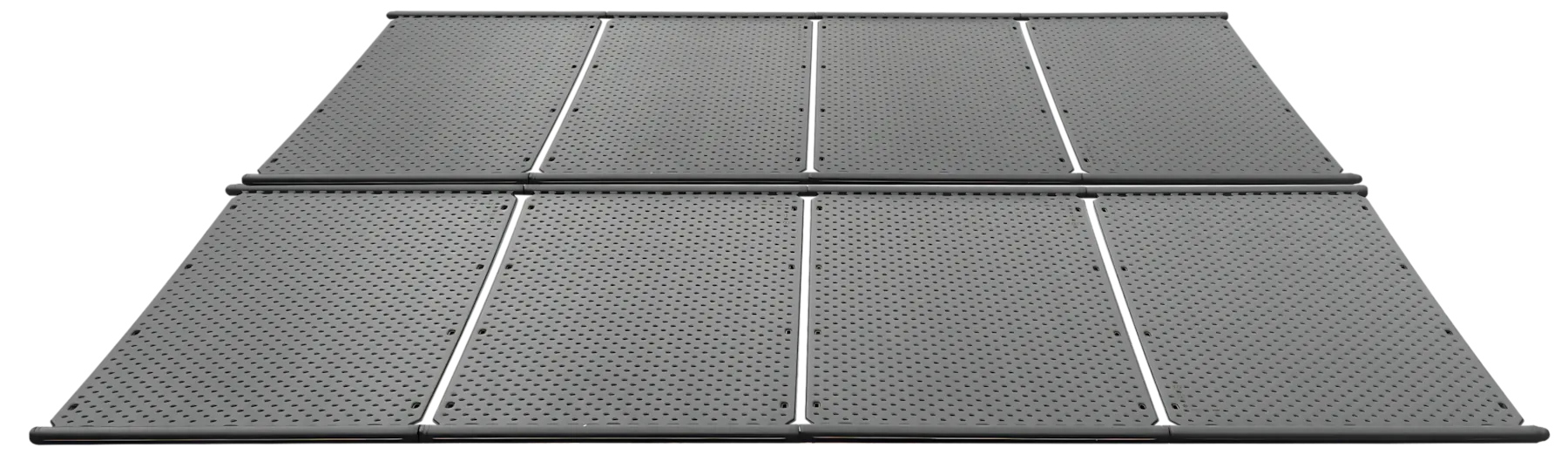
Array design
A Sleek and Clean Aesthetic
Get a cleaner uncluttered look compared to strip heating systems.
Cold weather performance
Heat When You Need it Most
Tube type collectors work well in warmer air, but struggle in spring and autumn. The key design principle that makes OKU panels so efficient is the reduction of surface heat losses wherever possible, including from the pool itself!
Key Efficiency Design Principles: OKU vs Strips

A flat face design has no excess curved shaded areas or hot webbing from which to bleed heat in cooler air, unlike round tubes which are typically partly shaded on one side.

The high panel flow rate pulls heat off the panel's face quickly and into your pool before it can escape. Long runs of narrow tubes typically have higher temperature differentials.

A high system flow rate makes the pool itself more efficient so that you're mixing the pool's warmer top layer deeper into the pool during the day; allowing it retain more heat overnight.
Consider Absorber to Webbing Area Ratio
Defined as the total tube (or channel) absorber area to the webbing (or welds) area, looking straight down on the collector.
OKU Performance+ Panels
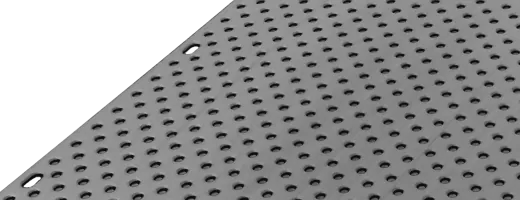
93%
PoolMasterPro 14 Strip
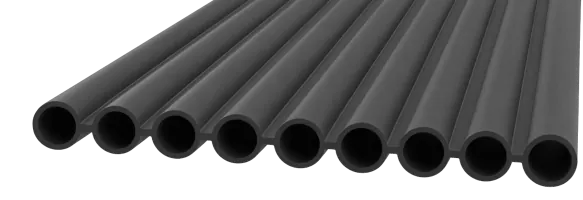
81%
Boss Solar 12 Tube Strip

74%
Boss Solar 10 Tube Strip

61%
This is an important factor to consider for system efficiency per square metre of collector area, especially for angled roof installation (less so for flat roofs). This ratio also influences the other important efficiency factor - total system flow rate. By maximizing these two factors we can boost not just collector efficiencies, but also reduce the pool's overnight heat losses by helping to remove the warm top layer that develops during the day; mixing it deeper into the pool.
Other system advantages
Compare at a Glance
OKU Performance+™ vs. PVC rubber strips.
The OKU Performance+™ panels are designed and made in Germany, adapted by us for Australian conditions to be the best overall solar pool heater systems in Australia bar none.
Made from rigid 3mm thick, high thermal conductance, ultra-durable HDPE, with near complete resistance against all that nature can throw at them. A unique system with a large number of in-parallel flow-channels that is designed to run at near zero pressure up on the roof; reducing pressure fatigue and eliminating potential for leaks.
The quality of these panels along with EcoOnline's exclusive fittings and fixings made from the most durable of materials, such as silicone and stainless steel, our attention to the smallest details and the precision engineering of all components - make for an unbeatable combination of efficiency, quality and longevity.
| Compare Features | EcoOnline OKU Performance+™ Panels | Traditional Rubber Strips |
|---|---|---|
| Collector Durability | 35 Year Warranty | 10-15 Year |
| Roof Space Requirements | Requires Less Space | Requires More Space |
| Needs Periodic Winter Flushing | Not Required | Required |
| Pump Energy Usage | Lower Usage | Uses More Power |
| Back Pressure on Pumps | Less Back Pressure | More Back Pressure |
| Potable Polymers | ✓Yes | Some, not all |
| Cockatoo Proof | ✓Yes | ✕No |
| Animal Proof | ✓Yes | ✕No |
| Hail Proof | ✓Yes | Depends on size of hail |
| Connection Seals | Few - Soft Silicone Over HDPE Barbs | Many - PVC tube over barb or O-ring |
| Connection Clamps | Stainless Steel Only | None or plastic or glued |
| Roof Attachment Means | Stainless Steel Only | Silicone Glue or Plastic |

Expert support
Buy from Specialists
Not from a sales guy who can't help you later.
Comprehensive manual, written by the leading author of the 2013 revised AS 3634-1989 pool heating standard. Incorporating 20 years of science and experience in solar pool heating.
Dispatch & shipping
Always in Stock
Shipped Fast
1–2 business days dispatch. Fast door-to-door delivery with StarTrack.
Our advantage: we only stock the two best systems.
That means every part is always on the shelf, backed by extensive support, so you get your pool up to temperature fast.
Typically shipped via (depending on postcode)

1–2 Day Dispatch / Door-to-Door / Australia Wide
StarTrack
Get it done now
Your Decision Tree
Buying a new system: our recommendation
1
Does your pool have independent solar ports?
2
Do you have a smaller pool or a 1st storey install?
YES
NO
↓ Continue to step 3
3
Larger pool or 2nd storey install?
Repairing or upgrading an existing system?
1
Choose from our collector only kits
2
Finally size your pump
(Or just request a custom sizing after purchase)
Need professional sizing tools?
Collector Specifications

| Dual Header OKU Panel | Specifications |
|---|---|
| Gross Area (as mounted) | 1.2 m² |
| Aperture Area (black area) | 1.1 m² |
| Panel Edge to edge length | 1370 mm |
| As mounted Edge to edge Length | 1400 mm |
| Panel Pipe to pipe width | 845 mm |
| Absorber edge to edge width | 824 mm |
| Dual Header Pipe OD | 40 mm metric |
| Interconnect Pipe OD | 25 mm metric |
| Flow rate range | 2–10 L/min/m² |
| Water content | ~6 L |
| Panel Weight | 6 kg (or 12 kg with water) |
| Recommended working pressure | -1 to 1 psi |
| Frost resistant | −20 to +115 °C |
| Certifications | SRCC |
Roof fixing
Wind Loading Considerations
In terms of wind loadings on panels our roof fixing methodology is the highest in its class up to wind region C. See the manual for a full description. We like to take a cautious over-engineered approach to wind loadings and suggest installers do the same as it's very easy to put down more fixings. However, there are some cases where we can't recommend panels over tubes due to high wind loadings (if in doubt please ask). As a guide please note the following recommendations:
| Wind Region | Single Storey Metal Roof | Single Storey Tile Roof | Double Storey Metal | Double Storey Tile |
|---|---|---|---|---|
| Wind Region A | ✓Okay | ✓Okay | ✓Okay | ✓Okay |
| Wind Region B | ✓Okay | Sheltered Location Only | ✓Okay | ✕Not Recommended |
| Wind Region C | Sheltered Location Only | ✕Not Recommended | ✕Not Recommended | ✕Not Recommended |
| Wind Region D | ✕Not Recommended | ✕Not Recommended | ✕Not Recommended | ✕Not Recommended |
Before you buy
Safety Requirements and Product Limitations
- Warning: Due to the potential of falling from heights, mounting the solar panels on a roof or structure at heights should only be undertaken by a professional solar panel installer, unless you are accustomed to and confident of performing the work safely.
- For ground level collectors the installer MUST check child safety fence regulations in the relevant state. Under no circumstances should collectors be installed so as to compromise the effectiveness of a child pool or spa fence safety barrier by providing a climbable object.
- At present this collector array system is not recommended for installations in cyclonic regions C (sheltered only) or D, or on houses situated on top of hills exposed to strong winds, or on second storey (or higher) roofs due to the danger of getting up on these roofs. Installations on tiles are for Wind Region A only.
- Collectors are to be used with chlorinated (or otherwise treated) pool water ONLY. Do not use collectors to heat fresh (untreated) water due to the potential for Legionella bacteria build up.
- We recommend collectors be installed with a minimum 2 degree pitch to ensure reliable evacuation of air bubbles.
- It's not recommended that collectors be installed more than 1m below the waterline of the pool.
Ready to buy
Choose Your System
FAQs
Frequently Asked Questions
How large are the panels?+
You should budget a gross panel dimension of approx. 140cm in length and 85cm in pipe to pipe width or about 1.2m² per panel.
How many panels do I need?+
Please use our interactive sizing calculator to accurately size your panel needs, if you have any difficulty please contact us. Note: we frown upon the practice of selling you more panels than what you actually need for your heating goals - to back our smaller sizing recommendation we provide a panel sizing guarantee.
I was sized a much larger rubber mat system - why is your panel area recommendation smaller?+
Besides the increased efficiency in cooler weather during critical season extension months - we absolutely frown upon the industry practice of selling you a larger system. The Australian Standard 3634-1989 for sheltered pools only recommends 60% (rubber strip) coverage in southern regions, 50% for mid regions, and 40% for northern regions. Over-sizing a system will result in polymer collectors stagnating at detrimental temperatures of up to 80°C for longer periods during hot days when the controller shuts the system down. As such over-sizing reduces collector lifetimes, requires a larger pump and higher upfront costs - all for diminishing gains in water temperature. If you require higher temperatures beyond our maximum collector recommendation we recommend a solar blanket.
Can I undersize my system and upgrade as needed later?+
Yes, but only to an extent. You should not go below our minimum 2 month extension recommendation, see our interactive sizing calculator. No - we are not trying to sell you a larger system. There are very good reasons why a system should not be dramatically undersized. Effective heating requires a minimum daily turnover typically 50% of your pool water volume. However, there are flow limitations on panels; hence an undersized system may not handle the flow required which could over-pressurise panels, or if the flow is insufficient, will result in an unmixed stratified layer of warm water which will cool excessively overnight.
Can I use my existing controller and mains power pump?+
You can use your existing controller if it's in good working order - however pressure pumps that power rubber mat systems are typically too strong for these panels. Over-sizing the pump not only uses more electricity but has the potential to limit panel lifetimes due to large pressure fluctuations in the panels. EcoOnline (and OKU) only recommends typically 0.25HP to 0.5HP pumps for small 8 to 30 panel systems.
Can I use my filter pump and save electricity by not installing a second pump?+
It is a false economy to use a large filter pump for solar applications - the pump still has to expend energy to pump water to the roof, putting back pressure on the pump reducing filter flow, hence there is no free energy gained. Besides this we don't recommend running a high power filter pump for 8 hours per day for the solar side (potentially over pressurising panels) if you don't need to filter for that long. An independent system with a well matched small pump will save you money in running costs and look after your panels in the long run.
Can I use a low energy usage variable speed pump?+
No, after witnessing customers try such pumps and struggle with them our advice now is not to use them, unless they can be set to run at a constant speed without a start up surge. We find variable pumps start at full power then taper back, this puts a lot of pressure fluctuations through the panels on start up which could limit panel lifetimes. We only recommend pumps that can pump at a constant set pressure.
I don't have independent solar lines installed on my pool can I tee into my main filter pump suction line?+
Generally we don't recommend this as you may have priming issues with your main filter pump during start up due to air being drawn in from the solar line tee you installed. Whether your filter pump will deprime in this case will depend on how far below the waterline you installed the solar tee. Note, a non-return on the solar line will not help here as non-returns are not generally air tight over time. If you do not have independent solar lines and can't install the tee far below the water line (minimum say 1m below) then your options are a manual system, a booster system or a motorised ball valve option, see the manual for plumbing diagrams.
Do we have installers?+
At present unfortunately no we do not have installers as we ship around Australia. However, our manuals are very comprehensive and cover most situations and issues. There is also unlimited tech support available. Most handymen/tradespeople can install our systems. From what we hear, solar pool heating installs are very seasonal, hence most specialist pool heating installers are run off their feet during the install season, this means they charge an arm and a leg for poor rushed installs. Our advice is if you can DIY safely or source a trusted installer that will take his/her time, you will save a great deal of money and headaches.
Can I download your comprehensive manual before I purchase?+
Yes, in fact we highly recommend you check over the manual to get a good idea of installation requirements before you purchase. The manual can freely be downloaded from our EcoOnline download page.
Is this system easy to install for tiles?+
Installation on tiles is more difficult and we recommend it should only be attempted by experienced DIY or tradespersons.
Can I slow the flow to increase the temperature gain?+
No, this is a common misconception. Slowing the water flow will result in a warmer outlet but also less harvested energy overall since there is much less warm water flowing. This is because the panel is being made to work at a higher temperature and hence a lower efficiency. Faster flow rates better strip the heat from the panels (up to a point of diminishing benefit). Optimal flow rate is achieved at 5-10L/min/panel. Over-sizing flow rates beyond 10L/min/panel will not provide more heating but can have a detrimental effect on the panels due to over-pressurisation depending on the back pressure determined by the number and size of the eyelet returns to your pool.
×
Talk to an expert
We're here to help with sizing, plumbing and installation questions.
Gregory Grochola (Physicist and Pool Heating Expert)